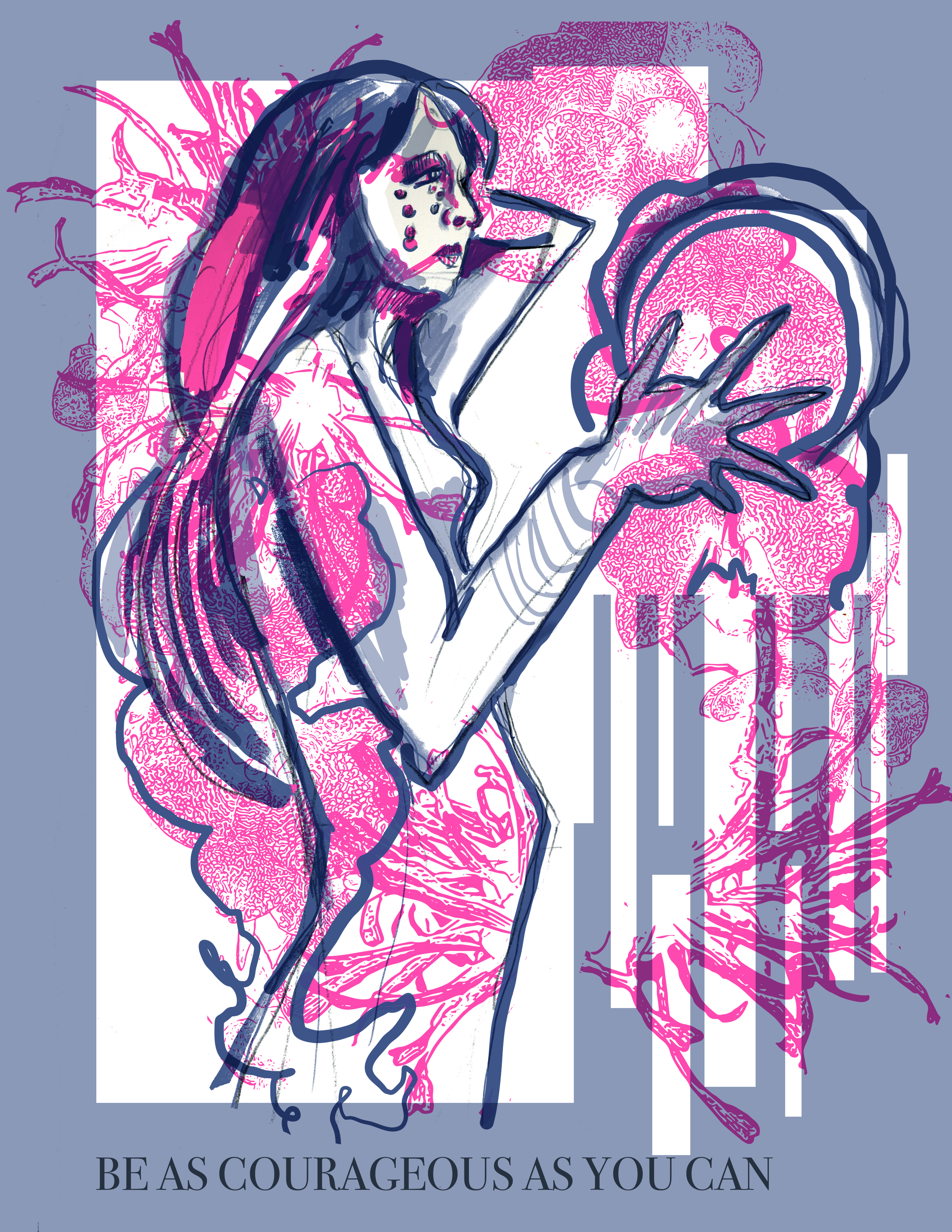
This post is written by Vanessa Lee, a multidisciplinary artist and library worker based in New York, NY, who was one of the participants in our Rare Book School summer course, ‘The Culture and Craft of Wood Type’. Vanessa runs resetreality, an independent illustration and figurative painting practice with her partner, Peter. She works at the Rare Book & Manuscript Library at Columbia University. Here, she reflects on our week with a wonderful group of scholars, librarians, and archivists, bringing to light the hidden histories of wood type.
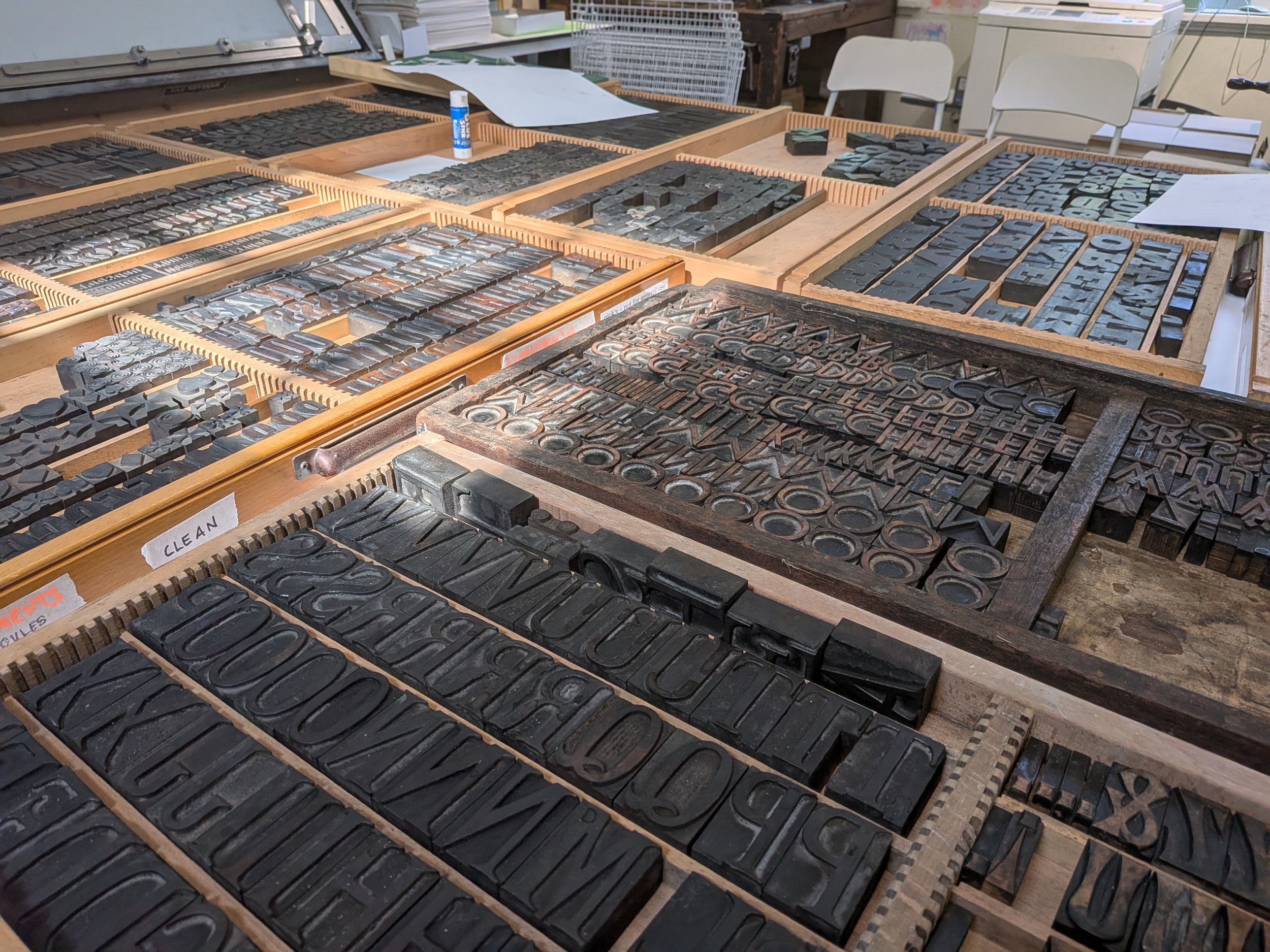
Wood type at Thin Ice Press
I want to start off with an urban legend that has circulated around the birding community for quite some time. It touches on how culture moves around in wild and unwieldy ways, until eventually it’s either fully absorbed or abandoned, depending on what else is happening at the time.
The story revolves around the European Starling, a smart, adaptable bird with iridescent plumage that is native to this region. On March 6, 1890, Eugene Schieffelin, a rich man with a mission, released 100 starlings into Central Park as part of an effort to bring all the birds ever mentioned in Shakespeare’s works to the US. The starling became a villain, a destroyer of ecosystems, something to be loathed for many years.
Of course (131 years later), scholarship and research prove this event was just a blip in the timeline, not the environmental catastrophe previously described by many. Yet it brings up so many questions about how people move culture in order to adapt to a new place, or audience. How do people acclimate to the unpredictable, the unknown?
Looking back at everything we did this week at Thin Ice Press, from practicing the printing process, to examining archival documents, and sharing what we know and don’t know with each other, reminded me of something Jill Gage encouraged us to do the week I spent looking at type specimens at the Newberry Library in Chicago last year. She asked us to look at all type as revival. Nothing comes out of a void, and if you look closely enough you can see how history, commerce, technology and visual language bleed into each other. I like to think wood type exemplifies these connecting threads and efforts.
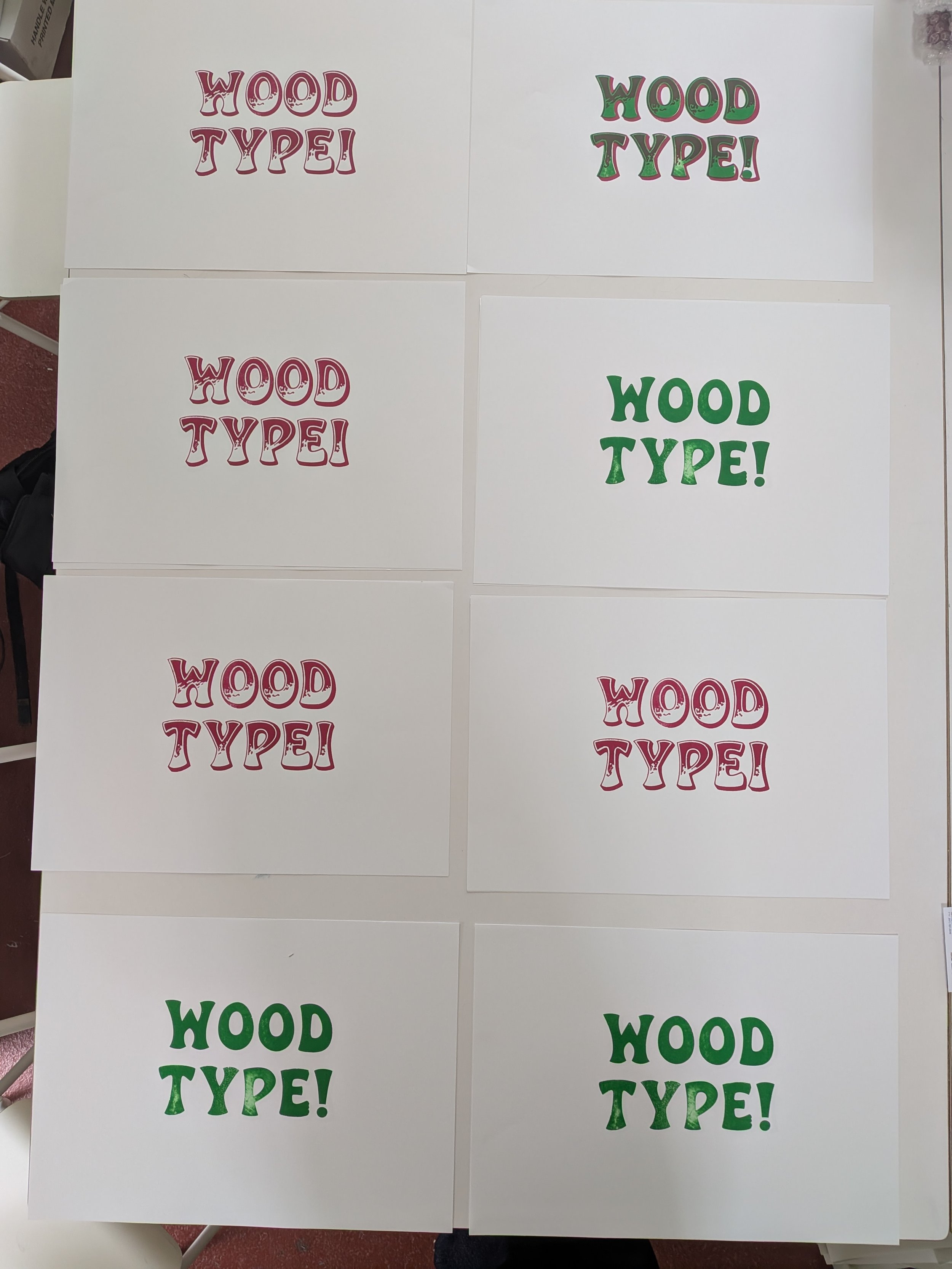
Experiments in chromatic printing at ‘The Culture and Craft of Wood Type’, Thin Ice Press
What fascinates me about wood type in particular is how prolific, loud, and strangely adaptable it still is, even now. In a 2017 lecture, David Shields describes the proliferation of wood type in print culture as an “arms race for our attention” which feels eerily familiar in a time where our attention has become the commodity tech companies constantly fight for. Maybe the aesthetic wood type represents feels like progress in the way Jenny Odell describes it in her book “How to Do Nothing: Resisting the Attention Economy” Odell writes:
“Our idea of progress is so bound up with the idea of putting something new in the world that it can feel counterintuitive to equate progress with destruction, removal, and remediation. But this seeming contradiction actually points to a deeper contradiction: of destruction (e.g. ecosystems) framed as construction (e.g. dams). Nineteenth-century views of progress, production, and innovation relied on an image of the land as a blank slate where its current inhabitants and systems were like so many weeds in what was destined to become an American lawn. But if we sincerely recognize all that was already here, both culturally and ecologically, we start to understand that anything framed as construction was actually also destruction.”
Wood type boomed when it did because it was viewed as an effective way to catch eyeballs and resources felt endlessly abundant. Shields argues that wood type began to fizzle when the cooler, shinier neon sign was invented in the 1910s. Aesthetic tastes began to shift as well with the rise of art deco and modernism, juxtaposed next to the somberness of two world wars. Still, we are left with an entire craft tradition, all this machinery, and so much type that consumed many trees, human labor, and creativity to make. We are all gathered here because we want to participate in the revival of this craft and build spaces where people can explore this process as a means of expressing their own ideas, adapting something old into something that feels new again. It’s creating hope through collective curiosity, and turning towards practice, in whatever form it may take.
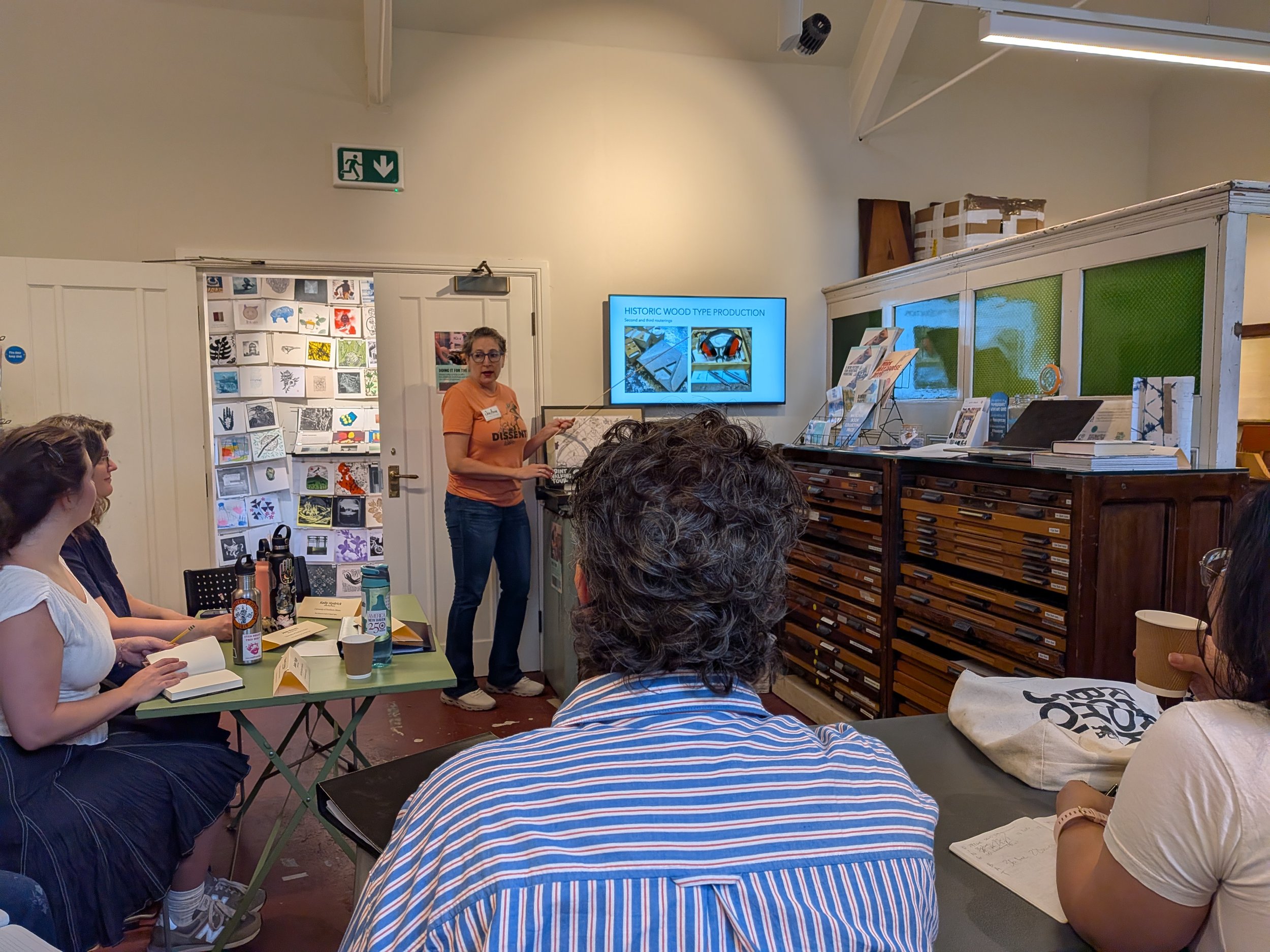
A guest lecture from Jen Anne, leading expert in wood type manufacture
I leave with more questions than answers. I don’t really know what this will all mean for my own practice yet, but I will end on a quote from Rick Rubin’s “The Creative Act”. Rubin writes
“The call of the artist is to follow the excitement. Where there’s excitement, there’s energy. And where there is energy, there is light.”